Thomas d'Aquin a commenté les trois premiers livres du traité des Politiques d'Aristote. Dans ce commentaire, il examine les questions les plus fondamentales relatives à la vie de l'être humain en société, questions qu'on néglige bien souvent parce qu'on estime, à tort, que les réponses qui y correspondent sont par trop évidentes. Quelle est l'origine des cités ? Quelle est leur finalité ? L'homme est-il par nature un animal social ? Quelle est la place de la cité parmi les autres communautés humaines ? Quelles sont les différentes sortes de constitutions et quelles sont leurs limites respectives ? Qu'est-ce qui fait d'un être humain un bon citoyen ? Sur quel critère devrait-on évaluer une loi ? Etc.

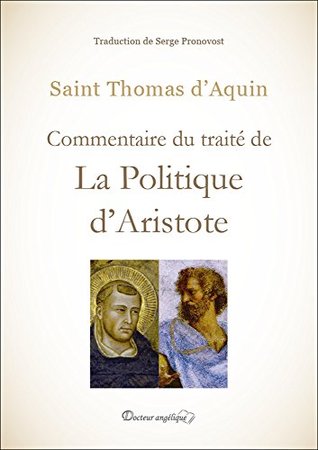


Thomas Aquinas was an immensely influential philosopher and theologian in the tradition of scholasticism, known as Doctor Angelicus and Doctor Communis.
He was the foremost classical proponent of natural theology, and the father of the Thomistic school of philosophy and theology. His influence on Western thought is considerable, and much of modern philosophy was conceived as a reaction against, or as an agreement with, his ideas, particularly in the areas of ethics, natural law and political theory.
The philosophy of Aquinas has exerted enormous influence on subsequent Christian theology, especially that of the Roman Catholic Church, extending to Western philosophy in general, where he stands as a vehicle and modifier of Aristotelianism, which he fused with the thought of Augustine.
... Show more