
- Bible
- Read the Bible
- Bible Versions
- Verse of the Day
- Reading Plans
- Verses by Topic
- Books of the Bible
- Bible Images
- Study
- Commentaries
- Concordances
- Dictionaries
- Encyclopedias
- Sermons
- Bible Atlas & Maps
- BP Wiki
- Devotionals
- Today's Devotionals
- Light of the World
- All Devotionals
- Inspirational Quotes
- More
- Picture Quotes
- Videos
- Inspirational
- Bible Study
- What The Bible Says
- Bible Q&As
- Daily Bread
- Bible by Genre
- Bible Stories
- Random Bible Verse
- Community
- Store
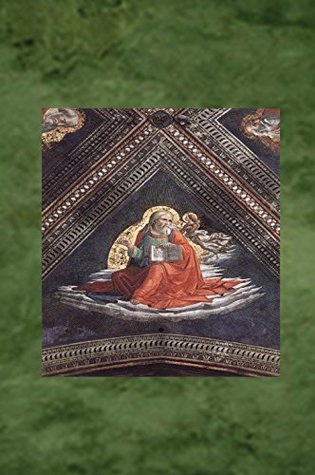
Golden Chain Bk 2 (aquinas Library Book 9)
by Thomas Aquinas
The Golden Chain, was compiled by one of the Catholic Church’s greatest minds, it has been an immeasurable use to priests writing homilies, lay people engaged in private or family study or of the Gospels and religious instructors will find it an invaluable help in preparing lessons. It is the perfect companion to study the Scriptures in detail and receive the wisdom of Thomas on particular passages.
Consider the Golden Chain as a discussion of the Gospels among the supreme theologians of the Church. Their exegesis is astonishing! A worthy recommendation for the serious student of the Bible for this work is the only work that Aquinas was known to carry around with him.
Thomas Aquinas was commissioned to write the Golden Chain by Pope Urban IV, in order that an orthodox Patristic commentary on the Gospels was readily available to all readers. John Henry Newman, was responsible for its translation into English in 1841. Cardinal Newman hoped that the Catena would become a source of catechesis within the family and the Church. The Golden Chain is one of the jewels of the 19th century Catholic Restoration, making the scholarship of the Fathers available to a wider audience. As with many of our texts we have employed a more sober, edited edition into a 21st century, modern, yet dignified style of American English, which is eminently suitable to the unsurpassable mysteries of the Catholic Faith.
This is Bk. 2 on Mathew.
Consider the Golden Chain as a discussion of the Gospels among the supreme theologians of the Church. Their exegesis is astonishing! A worthy recommendation for the serious student of the Bible for this work is the only work that Aquinas was known to carry around with him.
Thomas Aquinas was commissioned to write the Golden Chain by Pope Urban IV, in order that an orthodox Patristic commentary on the Gospels was readily available to all readers. John Henry Newman, was responsible for its translation into English in 1841. Cardinal Newman hoped that the Catena would become a source of catechesis within the family and the Church. The Golden Chain is one of the jewels of the 19th century Catholic Restoration, making the scholarship of the Fathers available to a wider audience. As with many of our texts we have employed a more sober, edited edition into a 21st century, modern, yet dignified style of American English, which is eminently suitable to the unsurpassable mysteries of the Catholic Faith.
This is Bk. 2 on Mathew.
BUY NOW
Kindle Edition, 586 pages
Published January 13th 2015 by Revelation Insight
Subscribe
Get Bible verse every day in your inbox
Read on Mobile


Group of Brands


© 2026 Bibleportal.com All rights reserved.
Thomas Aquinas was an immensely influential philosopher and theologian in the tradition of scholasticism, known as Doctor Angelicus and Doctor Communis.
He was the foremost classical proponent of natural theology, and the father of the Thomistic school of philosophy and theology. His influence on Western thought is considerable, and much of modern philosophy was conceived as a reaction against, or as an agreement with, his ideas, particularly in the areas of ethics, natural law and political theory.
The philosophy of Aquinas has exerted enormous influence on subsequent Christian theology, especially that of the Roman Catholic Church, extending to Western philosophy in general, where he stands as a vehicle and modifier of Aristotelianism, which he fused with the thought of Augustine.
... Show more