
- Bible
- Read the Bible
- Bible Versions
- Verse of the Day
- Reading Plans
- Verses by Topic
- Books of the Bible
- Bible Images
- Study
- Commentaries
- Concordances
- Dictionaries
- Encyclopedias
- Sermons
- Bible Atlas & Maps
- BP Wiki
- Devotionals
- Today's Devotionals
- Light of the World
- All Devotionals
- Inspirational Quotes
- More
- Picture Quotes
- Videos
- Inspirational
- Bible Study
- What The Bible Says
- Bible Q&As
- Daily Bread
- Bible by Genre
- Bible Stories
- Random Bible Verse
- Community
- Store
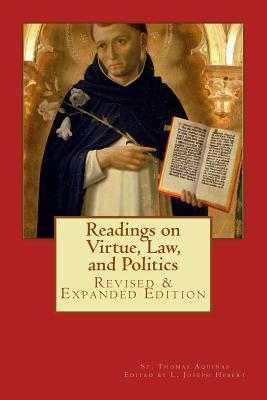
Readings on Virtue, Law, and Politics
by Thomas Aquinas
"The majestic elaboration of thought manifested in St. Thomas's work," says Josef Pieper, consists partly "in the fact that the theological wisdom of the earliest Christian centuries is interwoven with the philosophical heritage of the Greek world." In his Summa Theologica, we find not only a masterful synthesis of Aristotle and the Bible, but also a "genuine conversation or dialogue" with the greatest minds of philosophy and theology, including Plato and St. Augustine, Cicero and St. Ambrose. "St. Thomas is, in effect, placing himself within the stream of traditional truth nourished by the past; without claiming to give a final solution, he leaves the way open for future quest and discovery as that stream flows onward toward the yet unknown." Students of political philosophy have much to gain from the Summa, a book written "for the instruction of beginners," and whose influence on subsequent theory and practice in religion, politics, culture, and law has been immeasurable. At 3,000 pages, however, it can be difficult to navigate for the modern reader. This volume contains a selection of passages carefully chosen to give us direct access to Aquinas's main arguments on ethics (including human nature, psychology, happiness, virtue, and natural law) and politics (including human law, the political regime, and justice), as well as those theological questions most closely related to his political thought. It thereby seeks to reopen the way to this stream of insights into the nature of and means of achieving truth, justice, and the common good.
BUY NOW
Paperback, 312 pages
Published March 17th 2014 by Createspace Independent Publishing Platform
Subscribe
Get Bible verse every day in your inbox
Read on Mobile


Group of Brands


© 2026 Bibleportal.com All rights reserved.
Thomas Aquinas was an immensely influential philosopher and theologian in the tradition of scholasticism, known as Doctor Angelicus and Doctor Communis.
He was the foremost classical proponent of natural theology, and the father of the Thomistic school of philosophy and theology. His influence on Western thought is considerable, and much of modern philosophy was conceived as a reaction against, or as an agreement with, his ideas, particularly in the areas of ethics, natural law and political theory.
The philosophy of Aquinas has exerted enormous influence on subsequent Christian theology, especially that of the Roman Catholic Church, extending to Western philosophy in general, where he stands as a vehicle and modifier of Aristotelianism, which he fused with the thought of Augustine.
... Show more