
- Bible
- Read the Bible
- Bible Versions
- Verse of the Day
- Reading Plans
- Verses by Topic
- Books of the Bible
- Bible Images
- Study
- Commentaries
- Concordances
- Dictionaries
- Encyclopedias
- Sermons
- Bible Atlas & Maps
- BP Wiki
- Devotionals
- Today's Devotionals
- Light of the World
- All Devotionals
- Inspirational Quotes
- More
- Picture Quotes
- Videos
- Inspirational
- Bible Study
- What The Bible Says
- Bible Q&As
- Daily Bread
- Bible by Genre
- Bible Stories
- Random Bible Verse
- Community
- Store
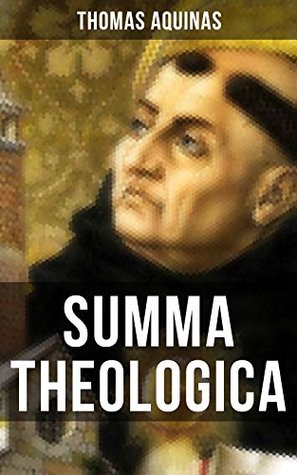
SUMMA THEOLOGICA: Including supplement, appendix, interactive links and annotations
by Thomas Aquinas
This ebook is the best-known work of Thomas Aquinas (c.1225–1274). Although unfinished, the Summa is "one of the classics of the history of philosophy and one of the most influential works of Western literature." It is intended as an instructional guide for moderate theologians, and a compendium of all of the main theological teachings of the Catholic Church. It presents the reasoning for almost all points of Christian theology in the West. The Summa Theologica is divided into three parts, and each of these three parts contains numerous subdivisions. Part 1 deals primarily with God and comprises discussions of 119 questions concerning the existence and nature of God, the Creation, angels, the work of the six days of Creation, the essence and nature of man, and divine government. Part 2 deals with man and includes discussions of 303 questions concerning the purpose of man, habits, types of law, vices and virtues, prudence and justice, fortitude and temperance, graces, and the religious versus the secular life. Part 3 deals with Christ and comprises discussions of 90 questions concerning the Incarnation, the Sacraments, and the Resurrection. Some editions of the Summa Theologica include a Supplement comprising discussions of an additional 99 questions concerning a wide variety of loosely related issues such as excommunication, indulgences, confession, marriage, purgatory, and the relations of the saints toward the damned. Scholars believe that Rainaldo da Piperno, a friend of Aquinas, probably gathered the material in this supplement from a work that Aquinas had completed before he began working on the Summa Theologica.
BUY NOW
Kindle Edition, 7355 pages
Published October 6th 2017 by Musaicum Books
Subscribe
Get Bible verse every day in your inbox
Read on Mobile


Group of Brands


© 2026 Bibleportal.com All rights reserved.
Thomas Aquinas was an immensely influential philosopher and theologian in the tradition of scholasticism, known as Doctor Angelicus and Doctor Communis.
He was the foremost classical proponent of natural theology, and the father of the Thomistic school of philosophy and theology. His influence on Western thought is considerable, and much of modern philosophy was conceived as a reaction against, or as an agreement with, his ideas, particularly in the areas of ethics, natural law and political theory.
The philosophy of Aquinas has exerted enormous influence on subsequent Christian theology, especially that of the Roman Catholic Church, extending to Western philosophy in general, where he stands as a vehicle and modifier of Aristotelianism, which he fused with the thought of Augustine.
... Show more