
- Bible
- Read the Bible
- Bible Versions
- Verse of the Day
- Reading Plans
- Verses by Topic
- Books of the Bible
- Bible Images
- Study
- Commentaries
- Concordances
- Dictionaries
- Encyclopedias
- Sermons
- Bible Atlas & Maps
- BP Wiki
- Devotionals
- Today's Devotionals
- Light of the World
- All Devotionals
- Inspirational Quotes
- More
- Picture Quotes
- Videos
- Inspirational
- Bible Study
- What The Bible Says
- Bible Q&As
- Daily Bread
- Bible by Genre
- Bible Stories
- Random Bible Verse
- Community
- Store
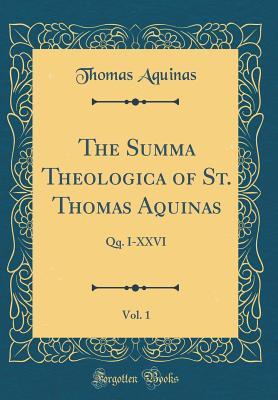
Excerpt from The Summa Theologica of St. Thomas Aquinas, Vol. 1: Qq. I-XXVI
We do not, indeed, attribute to human philosophy such force and authority as to judge it sufficient for the utter shutting out and uprooting of all errors. When the Chris tian religion was first established by the wondrous light of Faith shed abroad, not in the persuasive words of human wisdom, * but in showing of the Spirit and power, ' the whole world was restored to its primeval dignity. So also now, chiefly from the almighty power and help of God, we may hope that the darkness of error will be taken away from the minds of men, and that they will repent. But we must not despise or undervalue those natural helps which are given to man by the kindness and wisdom of God, Who strongly and sweetly orders all things and it stands to reason that a right use of philosophy is the greatest of these helps. For God did not give the light of reason in vain to the soul of man, nor does the superadded light of Faith quench, or even lessen, the strength of the understanding. Its effect is far from this. It perfects the, understanding, gives it new strength, and makes it fit for greater works. The very nature of the providence of God Himself, therefore, makes it needful for us to seek a safeguard in human knowledge when we strive to bring back the people to Faith and salva tion. The records of antiquity bear witness that this method, both probable and wise, was used habitually by the most illustrious Fathers of the Church. They, in truth, were wont to give to reason offices neither few nor small and these the great Augustine has summed up very shortly Attributing to this science that by which the life giving Faith is begotten, nourished, guarded, and strengthened.'
About the Publisher
Forgotten Books publishes hundreds of thousands of rare and classic books. Find more at www.forgottenbooks.comwww.forgottenbooks.com
This book is a reproduction of an important historical work. Forgotten Books uses state-of-the-art technology to digitally reconstruct the work, preserving the original format whilst repairing imperfections present in the aged copy. In rare cases, an imperfection in the original, such as a blemish or missing page, may be replicated in our edition. We do, however, repair the vast majority of imperfections successfully; any imperfections that remain are intentionally left to preserve the state of such historical works.
We do not, indeed, attribute to human philosophy such force and authority as to judge it sufficient for the utter shutting out and uprooting of all errors. When the Chris tian religion was first established by the wondrous light of Faith shed abroad, not in the persuasive words of human wisdom, * but in showing of the Spirit and power, ' the whole world was restored to its primeval dignity. So also now, chiefly from the almighty power and help of God, we may hope that the darkness of error will be taken away from the minds of men, and that they will repent. But we must not despise or undervalue those natural helps which are given to man by the kindness and wisdom of God, Who strongly and sweetly orders all things and it stands to reason that a right use of philosophy is the greatest of these helps. For God did not give the light of reason in vain to the soul of man, nor does the superadded light of Faith quench, or even lessen, the strength of the understanding. Its effect is far from this. It perfects the, understanding, gives it new strength, and makes it fit for greater works. The very nature of the providence of God Himself, therefore, makes it needful for us to seek a safeguard in human knowledge when we strive to bring back the people to Faith and salva tion. The records of antiquity bear witness that this method, both probable and wise, was used habitually by the most illustrious Fathers of the Church. They, in truth, were wont to give to reason offices neither few nor small and these the great Augustine has summed up very shortly Attributing to this science that by which the life giving Faith is begotten, nourished, guarded, and strengthened.'
About the Publisher
Forgotten Books publishes hundreds of thousands of rare and classic books. Find more at www.forgottenbooks.comwww.forgottenbooks.com
This book is a reproduction of an important historical work. Forgotten Books uses state-of-the-art technology to digitally reconstruct the work, preserving the original format whilst repairing imperfections present in the aged copy. In rare cases, an imperfection in the original, such as a blemish or missing page, may be replicated in our edition. We do, however, repair the vast majority of imperfections successfully; any imperfections that remain are intentionally left to preserve the state of such historical works.
BUY NOW
Hardcover, 428 pages
Published January 1st 2019 by Forgotten Books
Subscribe
Get Bible verse every day in your inbox
Read on Mobile


Group of Brands


© 2026 Bibleportal.com All rights reserved.
Thomas Aquinas was an immensely influential philosopher and theologian in the tradition of scholasticism, known as Doctor Angelicus and Doctor Communis.
He was the foremost classical proponent of natural theology, and the father of the Thomistic school of philosophy and theology. His influence on Western thought is considerable, and much of modern philosophy was conceived as a reaction against, or as an agreement with, his ideas, particularly in the areas of ethics, natural law and political theory.
The philosophy of Aquinas has exerted enormous influence on subsequent Christian theology, especially that of the Roman Catholic Church, extending to Western philosophy in general, where he stands as a vehicle and modifier of Aristotelianism, which he fused with the thought of Augustine.
... Show more