
- Bible
- Read the Bible
- Bible Versions
- Verse of the Day
- Reading Plans
- Verses by Topic
- Books of the Bible
- Bible Images
- Study
- Commentaries
- Concordances
- Dictionaries
- Encyclopedias
- Sermons
- Bible Atlas & Maps
- BP Wiki
- Devotionals
- Today's Devotionals
- Light of the World
- All Devotionals
- Inspirational Quotes
- More
- Picture Quotes
- Videos
- Inspirational
- Bible Study
- What The Bible Says
- Bible Q&As
- Daily Bread
- Bible by Genre
- Bible Stories
- Random Bible Verse
- Community
- Store
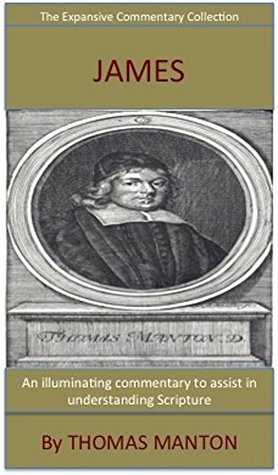
THE EXPANSIVE COMMENTARY COLLECTION is a new release of much loved and oft used commentaries.
Each commentary is beautifully formatted with every verse given an uncluttered presentation for ease of reference and use. We have taken great care to provide you with each individual commentary as it was intended and written by the original author.
Our commentaries are equipped with the very best active tables of contents that drill down from the main contents page to the individual Bible book, to the author, to the Bible book chapter and then to the very verse you are looking to study. These tables of contents have been designed for ease of use and to get you to the exact verse you are looking at.
Thomas Manton (1620-1677) was an English Puritan and clergyman. He held many positions in churches across England (Sowton and Colyton, Stoke Newington, Covent Garden) before being ejected from the church for non-conformity. Although he is not well known now he was much loved and appreciated in his day. He was affectionately known as “The Doctor” a term of endearment that has been used more often in recent memory of Dr. Martyn Lloyd-Jones.
In his day Manton was held in high esteem along with me such as John Owen. Ryle cited him as a favourite (describing him as a man who could neither say, nor do nor write anything without being observed) and Spurgeon championed the republication of Manton’s works in the 19th century (saying that his works contained a mighty mountain of sound theology and that his sermons were second to none).
Like all works of the Puritans great attention is given to examining the subject in its entirety. Manton expounds the whole of the Epistle of James with great care and detail. This exposition of James is most probably Manton’s greatest work, which is saying much given his many writings.
Each commentary is beautifully formatted with every verse given an uncluttered presentation for ease of reference and use. We have taken great care to provide you with each individual commentary as it was intended and written by the original author.
Our commentaries are equipped with the very best active tables of contents that drill down from the main contents page to the individual Bible book, to the author, to the Bible book chapter and then to the very verse you are looking to study. These tables of contents have been designed for ease of use and to get you to the exact verse you are looking at.
Thomas Manton (1620-1677) was an English Puritan and clergyman. He held many positions in churches across England (Sowton and Colyton, Stoke Newington, Covent Garden) before being ejected from the church for non-conformity. Although he is not well known now he was much loved and appreciated in his day. He was affectionately known as “The Doctor” a term of endearment that has been used more often in recent memory of Dr. Martyn Lloyd-Jones.
In his day Manton was held in high esteem along with me such as John Owen. Ryle cited him as a favourite (describing him as a man who could neither say, nor do nor write anything without being observed) and Spurgeon championed the republication of Manton’s works in the 19th century (saying that his works contained a mighty mountain of sound theology and that his sermons were second to none).
Like all works of the Puritans great attention is given to examining the subject in its entirety. Manton expounds the whole of the Epistle of James with great care and detail. This exposition of James is most probably Manton’s greatest work, which is saying much given his many writings.
BUY NOW
Kindle Edition, 473 pages
Published June 7th 2017
Subscribe
Get Bible verse every day in your inbox
Read on Mobile


Group of Brands


© 2026 Bibleportal.com All rights reserved.
Thomas Manton was an English Puritan clergyman.
Born at Lydeard St Lawrence, Somerset, Manton was educated at Blundell's School and then at Hart Hall, Oxford where he graduated BA in 1639. Joseph Hall, bishop of Norwich, ordained him deacon the following year: he never took priest's orders, holding that he was properly ordained to the ministerial office. He was then appointed town lecturer of Collumpton in Devon. In the winter of 1644-1645, he was appointed to preach at St Mary's Church in the parish of Stoke Newington in Middlesex, where in 1646 he was joined by Alexander Popham as the parish's ruling elder and began to build a reputation as a forthright and popular defender of Reformed principles.
Although Manton is little known now, in his day he was held in as much esteem as men like John Owen. He was best known for his skilled expository preaching, and was a favourite of John Charles Ryle, who championed his republication in the mid-19th century. His finest work is probably his Exposition of James.
... Show more