
- Bible
- Read the Bible
- Bible Versions
- Verse of the Day
- Reading Plans
- Verses by Topic
- Books of the Bible
- Bible Images
- Study
- Commentaries
- Concordances
- Dictionaries
- Encyclopedias
- Sermons
- Bible Atlas & Maps
- BP Wiki
- Devotionals
- Today's Devotionals
- Light of the World
- All Devotionals
- Inspirational Quotes
- More
- Picture Quotes
- Videos
- Inspirational
- Bible Study
- What The Bible Says
- Bible Q&As
- Daily Bread
- Bible by Genre
- Bible Stories
- Random Bible Verse
- Community
- Store
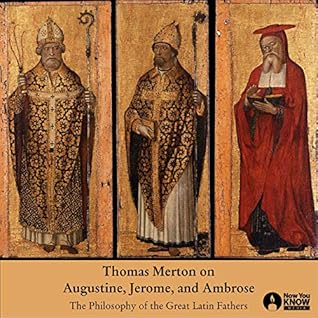
Thomas Merton on Augustine, Jerome, and Ambrose: The Philosophy of the Great Latin Fathers
by Thomas Merton
In Christianity’s early years, three men laid the groundwork for the budding religion’s philosophy, theology, and learning. Seven centuries later, a spiritual visionary taught gripping classes on these Church Fathers.
Thomas Merton on Augustine, Jerome, and Ambrose transports these gems from the archives to the public for the first time. Recorded in 1962, the set collects five conferences Thomas Merton gave to the novices at the Abbey of Gethsemani. Taking a seat in Merton’s classroom, you will explore the Doctors of the Church who shaped Western philosophy.
Why study the foundational texts of Christian thought? Merton prefaces his talks by answering this question. Because they form the basis of the contemplative and learned life, these works are vital to his brothers’ vocation. The same holds true for anyone who wants to foster critical thinking and an appreciation of the liberal arts.
You will begin with an introduction to the foremost philosopher of Christian antiquity—Saint Augustine—and his classic On Christian Doctrine. Parsing Augustine’s complex theology into accessible talks, Merton shows you his core ideas. Before taking a deeper dive into Augustine, you will turn to the mystical humanism of Saint Ambrose. Next, you will examine St. Jerome’s letters, which rank among the most important Christian texts.
As entertaining as he is knowledgeable, Merton connects with students through humorous anecdotes. His passionate teaching will both inform you and instill a lifelong love of philosophy.
Thomas Merton on Augustine, Jerome, and Ambrose transports these gems from the archives to the public for the first time. Recorded in 1962, the set collects five conferences Thomas Merton gave to the novices at the Abbey of Gethsemani. Taking a seat in Merton’s classroom, you will explore the Doctors of the Church who shaped Western philosophy.
Why study the foundational texts of Christian thought? Merton prefaces his talks by answering this question. Because they form the basis of the contemplative and learned life, these works are vital to his brothers’ vocation. The same holds true for anyone who wants to foster critical thinking and an appreciation of the liberal arts.
You will begin with an introduction to the foremost philosopher of Christian antiquity—Saint Augustine—and his classic On Christian Doctrine. Parsing Augustine’s complex theology into accessible talks, Merton shows you his core ideas. Before taking a deeper dive into Augustine, you will turn to the mystical humanism of Saint Ambrose. Next, you will examine St. Jerome’s letters, which rank among the most important Christian texts.
As entertaining as he is knowledgeable, Merton connects with students through humorous anecdotes. His passionate teaching will both inform you and instill a lifelong love of philosophy.
BUY NOW
Audiobook
Published 2018 by Now You Know Media Inc.
Subscribe
Get Bible verse every day in your inbox
Read on Mobile


Group of Brands


© 2026 Bibleportal.com All rights reserved.
Thomas Merton wrote more than 70 books, mostly on spirituality, as well as scores of essays and reviews. Merton was a keen proponent of interfaith understanding.
Interest in his work contributed to a rise in spiritual exploration beginning in the 1960s and 1970s in the US. Merton's letters and diaries, reveal the intensity with which their author focused on social justice issues, including the civil rights movement and proliferation of nuclear arms. He had prohibited their publication for 25 years after his death. Publication raised new interest in Merton's life.
... Show more