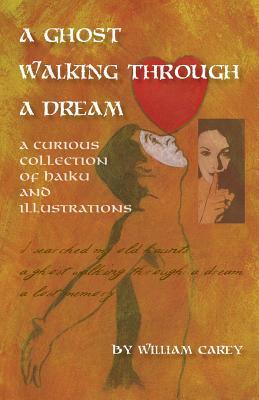
Have a look at the world through the eyes of an artist...viewing it through a prism of art and haiku. Curious and eccentric, this book covers a wide range of subjects from romance to philosophy. It has over 100 haiku and 50 illustrations. It is easy to read with unusual words defined at the bottom of the page. Haiku, is a seventeen syllable Japanese verse form, that began in 17th century Japan. It is a very spontaneous process that distills thoughts and observations down to their essence. You may be inspired to write some of your own. The art in this book is just as spontaneous. Many of the initial sketches were done in coffee houses, then they were finished in the studio. In many cases, the art and haiku have been combined into an illustrated/haiku form. The main purpose of this book is to entertain. So, enjoy. Every time you pick it up, you may find new insights into these poems.



The English Baptist preacher William Carey was known as the father of modern Protestant missions, and was a pioneer of new-style evangelism in India. He helped found the Baptist Missionary Society in 1792 and shortly thereafter went to India. Carey did most of the work in publishing the Bible in many Indian vernaculars. He wrote grammars of the vernaculars and several dictionaries. He became a professor of Sanskrit at Fort William College, Calcutta.
In 1793 Carey arrived in India, where he was confronted with the antimissionary attitude of the British colonial government. He settled in the Danish colony of Serampore, near Calcutta, where he inspired the teamwork of the "Serampore Trio" (Carey, William Ward, and Joshua Marshman). This "commune" attempted to translate the universality of the Christian faith into terms of practical involvement in all aspects of Indian life.
The basic principle of communal life was that every member should be, as far as possible, self-supporting. Carey paid for his missionary work (among other things) by acting as a director of an indigo factory and as a professor of languages in a secular institution. The objective of the community was to disseminate the gospel in all possible ways: by preaching, by teaching (in schools), and by literature (translating the Bible into more than 30 languages). Carey's translation service was noteworthy. He also made available some of the Indian classics and was instrumental in the renaissance of Hindu culture in the 19th century.
... Show more