
- Bible
- Read the Bible
- Bible Versions
- Verse of the Day
- Reading Plans
- Verses by Topic
- Books of the Bible
- Bible Images
- Study
- Commentaries
- Concordances
- Dictionaries
- Encyclopedias
- Sermons
- Bible Atlas & Maps
- BP Wiki
- Devotionals
- Today's Devotionals
- All Devotionals
- Inspirational Quotes
- More
- Picture Quotes
- Videos
- Inspirational
- Bible Study
- What The Bible Says
- Bible Q&As
- Daily Bread
- Bible by Genre
- Bible Stories
- Random Bible Verse
- Community
- Store
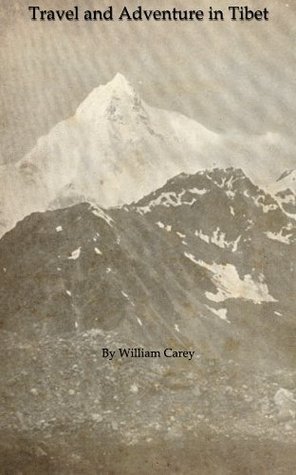
Excerpt:
Starting from the north of China, near the Great Wall, Miss Taylor entered Tibet, penetrated almost to Lhasa, and returned by another route. She was seven months and ten days in the forbidden land. Her only arms were a pistol, and her only instruments a telescope and a watch. The pistol had been packed in the baggage and never saw the light. The telescope was stolen, and it does not appear that she ever had occasion to use it. It was probably intended as a spy-glass for robbers; but those gentry swarmed about her so close and so often that looking for them at long range would have been a mere ridiculous superfluity. The watch she tried unceasingly to barter for something more useful, such as a tent or a tat. Without aneroid, thermometer, or theodolite, she toiled over unmapped mountains and jogged through unvisited valleys, provokingly oblivious of the claims of science, and constrained only when something went wrong with the cooking to notice the boiling-point.
The absence of scientific research does not, however, detract from the human interest of Miss Taylor's story. She kept a diary for the whole period of her adventurous journey, from the day when, at dawn, she stole out of Tau-Chau and across the border, to that other day when she emerged at Tachien-lu, having cast her line in a long loop over the rugged interior. This diary is now published for the first time, eight years after the event.
The original lies on my desk. It is a small black notebook, stained and smudged, but closely pencilled on every page. Night after night, at the end of each comfortless march, and as well as numbed fingers would let her, she jotted down the main features of the day. Only those who have faced the cold and fatigue of such travel, without intending to write a book or record the results of scientific observation, can really appreciate the significance of this persistence.
Not till the diary had been written would the tired traveller burrow into her sleeping-bag under tent or cave. When, at last, the tent had been taken, and no cave could be found, she settled herself to sleep on the snow. What a comical little bundle it must have been for the merry stars to wink at!
Starting from the north of China, near the Great Wall, Miss Taylor entered Tibet, penetrated almost to Lhasa, and returned by another route. She was seven months and ten days in the forbidden land. Her only arms were a pistol, and her only instruments a telescope and a watch. The pistol had been packed in the baggage and never saw the light. The telescope was stolen, and it does not appear that she ever had occasion to use it. It was probably intended as a spy-glass for robbers; but those gentry swarmed about her so close and so often that looking for them at long range would have been a mere ridiculous superfluity. The watch she tried unceasingly to barter for something more useful, such as a tent or a tat. Without aneroid, thermometer, or theodolite, she toiled over unmapped mountains and jogged through unvisited valleys, provokingly oblivious of the claims of science, and constrained only when something went wrong with the cooking to notice the boiling-point.
The absence of scientific research does not, however, detract from the human interest of Miss Taylor's story. She kept a diary for the whole period of her adventurous journey, from the day when, at dawn, she stole out of Tau-Chau and across the border, to that other day when she emerged at Tachien-lu, having cast her line in a long loop over the rugged interior. This diary is now published for the first time, eight years after the event.
The original lies on my desk. It is a small black notebook, stained and smudged, but closely pencilled on every page. Night after night, at the end of each comfortless march, and as well as numbed fingers would let her, she jotted down the main features of the day. Only those who have faced the cold and fatigue of such travel, without intending to write a book or record the results of scientific observation, can really appreciate the significance of this persistence.
Not till the diary had been written would the tired traveller burrow into her sleeping-bag under tent or cave. When, at last, the tent had been taken, and no cave could be found, she settled herself to sleep on the snow. What a comical little bundle it must have been for the merry stars to wink at!
BUY NOW
Kindle Edition, 192 pages
Published August 5th 2012 (first published 2009)
Subscribe
Get Bible verse every day in your inbox
Read on Mobile


Group of Brands


© 2026 Bibleportal.com All rights reserved.
The English Baptist preacher William Carey was known as the father of modern Protestant missions, and was a pioneer of new-style evangelism in India. He helped found the Baptist Missionary Society in 1792 and shortly thereafter went to India. Carey did most of the work in publishing the Bible in many Indian vernaculars. He wrote grammars of the vernaculars and several dictionaries. He became a professor of Sanskrit at Fort William College, Calcutta.
In 1793 Carey arrived in India, where he was confronted with the antimissionary attitude of the British colonial government. He settled in the Danish colony of Serampore, near Calcutta, where he inspired the teamwork of the "Serampore Trio" (Carey, William Ward, and Joshua Marshman). This "commune" attempted to translate the universality of the Christian faith into terms of practical involvement in all aspects of Indian life.
The basic principle of communal life was that every member should be, as far as possible, self-supporting. Carey paid for his missionary work (among other things) by acting as a director of an indigo factory and as a professor of languages in a secular institution. The objective of the community was to disseminate the gospel in all possible ways: by preaching, by teaching (in schools), and by literature (translating the Bible into more than 30 languages). Carey's translation service was noteworthy. He also made available some of the Indian classics and was instrumental in the renaissance of Hindu culture in the 19th century.
... Show more