
- Bible
- Read the Bible
- Bible Versions
- Verse of the Day
- Reading Plans
- Verses by Topic
- Books of the Bible
- Bible Images
- Study
- Commentaries
- Concordances
- Dictionaries
- Encyclopedias
- Sermons
- Bible Atlas & Maps
- BP Wiki
- Devotionals
- Today's Devotionals
- Light of the World
- All Devotionals
- Inspirational Quotes
- More
- Picture Quotes
- Videos
- Inspirational
- Bible Study
- What The Bible Says
- Bible Q&As
- Daily Bread
- Bible by Genre
- Bible Stories
- Random Bible Verse
- Community
- Store
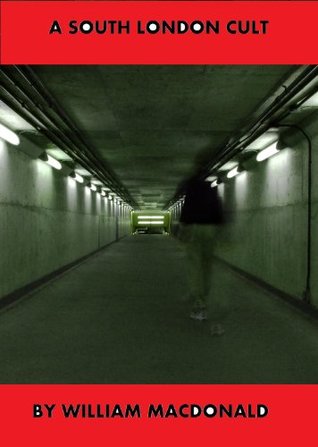
A South London Cult
by William MacDonald Devotions
A man is found murdered on an impoverished south London housing estate. He had been crucified, his hands and feet nailed to a wooden cross, and his feet doused in petrol and set alight. To the excitement and fear of the media, the police and local politicians the man is known to be associated with a local cult.
The cult is led by Will, an ambitious preacher. His message is that that the only way for humans to find happiness is by being good to others. It is part of our genetic make-up, a function of our creation as a social animal. For humans to be good, they need to suppress their instinctive tendency towards evil. To do this they need to feel inferior to, as in they need to worship, those rare people that are pure goodness.
To spread his message and grow his movement Will relies on the publicity the cult generates by cleaning up the local housing estates, freeing them from crime, violence and poverty.
A newspaper picture of the crucified man is recognized by Jack, an unsuccessful solicitor with a romantic disposition and a casual ability with violence. Two years before the man had persuaded his fiancée to leave him to join the cult. Afraid for his missing fiancée in the wake of the murder, finding an excuse to search for her and still carrying the humiliation that her departure imposed on him, Jack pretends to join the cult. Mystified by the murder, partly impressed and partly contemptuous of the cult’s message, Jack struggles to find his fiancée.
Max is a gay church going police officer, who combines a liberal philosophy with an unstable ambition and a bitter hostility to the other policemen around him. He feels his position threatened by the vigilante activities of the cult. Seeing the murder as the looked for final proof of the sinister nature of the cult he applies increasing pressure on it as he attempts to find the murderers. Nothing however is as he expects.
With Jack and Max looking on the cult ties itself into an escalating cycle of confrontation, intimidation and protest with the world around it as its growing power coupled with its instinctive paranoia feeds off and feeds the surrounding hostility. Inevitably and inexorably, the cult is drawn into violence, the total contradiction of its own reason for existence.
The cult is led by Will, an ambitious preacher. His message is that that the only way for humans to find happiness is by being good to others. It is part of our genetic make-up, a function of our creation as a social animal. For humans to be good, they need to suppress their instinctive tendency towards evil. To do this they need to feel inferior to, as in they need to worship, those rare people that are pure goodness.
To spread his message and grow his movement Will relies on the publicity the cult generates by cleaning up the local housing estates, freeing them from crime, violence and poverty.
A newspaper picture of the crucified man is recognized by Jack, an unsuccessful solicitor with a romantic disposition and a casual ability with violence. Two years before the man had persuaded his fiancée to leave him to join the cult. Afraid for his missing fiancée in the wake of the murder, finding an excuse to search for her and still carrying the humiliation that her departure imposed on him, Jack pretends to join the cult. Mystified by the murder, partly impressed and partly contemptuous of the cult’s message, Jack struggles to find his fiancée.
Max is a gay church going police officer, who combines a liberal philosophy with an unstable ambition and a bitter hostility to the other policemen around him. He feels his position threatened by the vigilante activities of the cult. Seeing the murder as the looked for final proof of the sinister nature of the cult he applies increasing pressure on it as he attempts to find the murderers. Nothing however is as he expects.
With Jack and Max looking on the cult ties itself into an escalating cycle of confrontation, intimidation and protest with the world around it as its growing power coupled with its instinctive paranoia feeds off and feeds the surrounding hostility. Inevitably and inexorably, the cult is drawn into violence, the total contradiction of its own reason for existence.
BUY NOW
Kindle Edition, 357 pages
Published June 11th 2012 by MAL Publishing
Subscribe
Get Bible verse every day in your inbox
Read on Mobile


Group of Brands


© 2026 Bibleportal.com All rights reserved.
His more than over eighty-four works published in North America are characterized by a clarity and economy of words that only comes by a major time investment in the Word of God.
MacDonald graduated with an AB degree from Tufts College (now University) in 1938 and an MBA degree from Harvard Business School in 1940. During the 1940's he was on active duty in the US Navy for five years.
He was President of Emmaus Bible College, a teacher, preacher, and Plymouth Brethren theologian alongside his ministry as a writer. He was a close friend and worker with O.J. Gibson.
MacDonald last resided in California where he was involved in his writing and preaching ministry. He went to be with the Lord in 2007. ... Show more